Outdoor Swimming as a Social and Climate Resilience Infrastructure of Care
Date & time
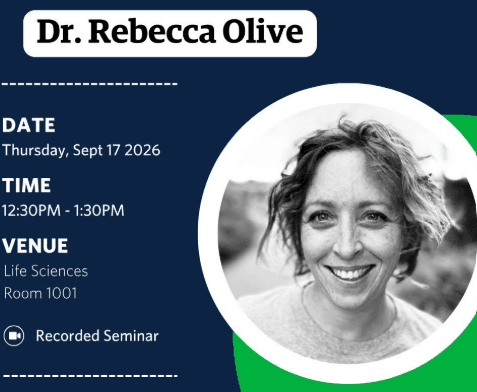
Thursday, September 17 · 12:30 – 1:30 PM
Location
Life Sciences Room 1001

About
Join us on September 17 when Dr. Rebecca Olive explores; "Outdoor Swimming as a Social and Climate Resilience Infrastructure of Care" Learn more below or in the link in bio: https://kin.educ.ubc.ca/events/event/seminar-rebecca-olive/ Abstract: The compounding, cascading impacts of the changing climate on our everyday lives are becoming increasingly apparent. As heatwaves increase in frequency, duration, intensity, and fatalities due to a changing planetary climate, public health advice to stay indoors during extreme heat deepens social isolation and disconnects people from natural environments that support their wellbeing (Lopes et al. 2018). At the same time, many communities are losing access to affordable, safe and inclusive places to swim as public pools age and local governments struggle with maintenance costs. These interconnected economic, social and environmental challenges are exemplified in decreasing access to cool, welcoming outdoor spaces. And yet, swimming and water cultures remain popular social and physical health and wellbeing activities. Informal, recreational sports and physical activities impact our community connections in multiple ways. In the case of swimming, the water itself plays a central role in conducting encounter, intimacy and connection. Drawing on fieldwork, interviews and social media data from a project based in Australia, this discussion will explore outdoor swimming as a social infrastructure in the public life of cities and towns, through which meaningful relationships of care are formed and maintained. Following Sarah Hall’s (2020) work on ‘intimacy as a form of infrastructure’ (p. 90), we expand these notions to think about how swimming as a social infrastructure creates social connectivity and increases climate resilience on a warming planet.